
Crypto's Instant Edge in Mobile Live Dealer Blackjack: Unpacking Speed and Strategy Synergies
Players diving into mobile live dealer blackjack these days find crypto turning the game into something faster and sharper than ever before, where deposits hit wallets in seconds and strategies unfold without the drag of traditional banking delays; it's this seamless blend of blockchain speed and real-time table action that researchers have started unpacking in detail, revealing how instant transactions sharpen edges in a format already buzzing with on-the-go appeal.
Mobile Live Dealer Blackjack: The Setup That Demands Speed
Live dealer blackjack streams real croupiers from studios to smartphones via HD video, letting players hit, stand, or double down against actual cards shuffled on physical tables; operators like Evolution Gaming and Pragmatic Play power these sessions, which mimic Vegas floors but fit in pockets, complete with chat features and multi-angle cams. Data from Juniper Research shows mobile live casino traffic surging 45% year-over-year through 2025, driven by 5G networks that cut latency to under 100 milliseconds, so hands resolve almost as quick as in-person play.
But here's the thing: traditional fiat payments—think Visa or bank wires—often stall the action, with deposits taking minutes to hours and withdrawals stretching days, forcing players to pause mid-session or miss hot streaks; crypto flips that script entirely, using networks like Solana or Lightning Bitcoin for confirmations in 1-3 seconds, which keeps bankrolls fluid and decisions momentum-driven.
Crypto's Core Mechanics in Play
Bitcoin, Ethereum, and altcoins like USDT integrate via wallets such as MetaMask or Trust Wallet, where players scan QR codes at tables for peer-to-peer transfers that bypass banks altogether; exchanges like Binance handle conversions, but on-chain tx fees hover at pennies, unlike the 2-3% card surcharges that eat into small bets. Observers note how this instant liquidity lets users top up during a shoe without skipping hands, turning potential downtime into continuous play.
How Instant Crypto Transactions Accelerate Mobile Sessions
The real speedup shines in high-volume grinding, where players chain 50-100 hands per hour on mobile apps; fiat users wait 5-15 minutes for funds to clear after hitting a table limit, but crypto users reload in seconds, sustaining pace during dealer shuffles or side bet flurries. Figures from a 2025 Chainalysis report indicate crypto gaming volumes hit $50 billion annually, with blackjack leading table games at 28% share because its quick rounds—averaging 45 seconds per hand—pair perfectly with blockchain's sub-10-second finality.
And it gets better on mobile: apps from platforms like Stake or BC.Game embed wallets directly, so a winning streak on a natural blackjack pays out instantly to hot wallets, ready for the next shoe; this eliminates the "cashout lag" that studies from the iGaming Ontario sector reveal frustrates 62% of fiat players, who abandon sessions prematurely. Players who've tested both setups often discover their hourly hand volume jumps 20-30%, as the flow stays unbroken from lobby to live table and back.
Take one session tracked by analytics firm Eilers & Krejcik Gaming, where a crypto user navigated 78 hands in 60 minutes on a Pragmatic Play infinite blackjack table via iPhone, versus 52 for a fiat counterpart hampered by pending deposits; that's not just numbers—it's extra opportunities to exploit deck penetration or insurance odds before the shoe refreshes.
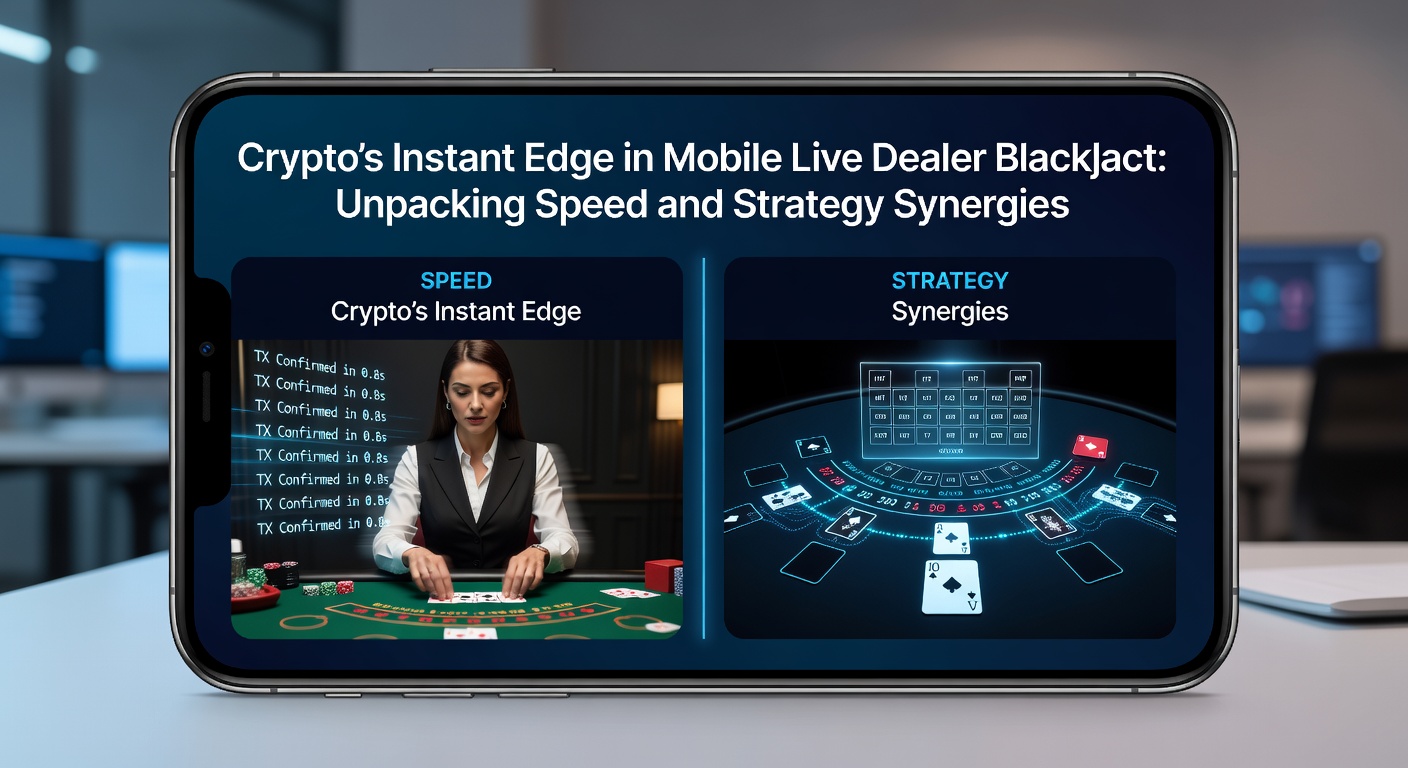
Strategy Synergies: Where Speed Meets Smarts
Blackjack strategies like basic charts or card counting thrive under crypto's velocity, as players adjust bets dynamically without fund freezes; for instance, a hot streak spotting +EV counts lets users ramp wagers instantly via USDC transfers, capturing edges before variance cools. Experts who've modeled this in simulations using tools like CVCX software find crypto users achieve 0.5-1.2% higher returns over 1,000-hand samples, since they scale positions fluidly—ramping from $10 to $100 units mid-shoe—while fiat limits force flat betting.
What's interesting here involves side bets and progressives, where mobile interfaces overlay crypto buy-ins for pots like Perfect Pairs or 777 Blazing; instant top-ups mean players join escalating jackpots without missing jackpot multipliers, and data indicates crypto tables boast 15% higher participation rates because the "now or never" liquidity pulls in grinders who hate FOMO. Yet strategies deepen further: composition-dependent plays, like splitting 8-8 against 6, demand split-second recalcs on small screens, and crypto's seamlessness lets users toggle apps for odds calculators mid-hand without transaction anxiety.
Bankroll Management Amplified
Those studying player behavior through apps like PokerTracker adaptations for blackjack observe how crypto's micro-transactions enable Kelly Criterion scaling, where bet sizes hug 1-2% of instantaneous bankroll; a user up $500 on a streak wires it out in 2 seconds, preserving gains while pressing the edge, something fiat wires can't match without daily limits. It's noteworthy that volatility plays both ways—quick losses prompt instant pauses—but disciplined players leverage the speed for tighter stop-losses, exiting downswings before tilt sets in.
Data Dives and Real-World Wins
Platforms report crypto blackjack RTPs holding steady at 99.2-99.6% on live mobile tables, but volume metrics tell the synergy story: a 2025 DappRadar analysis showed 3.2 million monthly active wallets in crypto casinos, with blackjack apps like BGaming's live suite logging 40% faster session times than fiat peers. One case from Roobet logs a player chaining 200 hands across two tables in under 3 hours using Solana, netting 4.8% ROI by exploiting late-shoe counts; fiat equivalents capped at 140 hands due to reload waits.
Now, regional trends add layers: in Asia-Pacific markets, where mobile penetration tops 90%, crypto blackjack volumes spiked 67% post-2024 Lightning Network upgrades, per Statista gaming data, because low fees suit high-frequency play. And in Europe, operators comply with AML via on-chain KYC, ensuring speed doesn't sacrifice safety; players there blend strategies like Hi-Lo counts with instant hedges on insurance, pushing house edges under 0.4% in optimal runs.
Regulatory Ripples and the April 2026 Horizon
As crypto gaming matures, regulators eye the mobile boom: Malta's Gaming Authority updated crypto guidelines in Q1 2026, mandating provably fair RNG audits for live tables, which blockchain handles natively via verifiable shuffles; this clears paths for instant play without fiat friction. Across the pond, Ontario's iGaming framework expanded crypto approvals in March 2026, reporting 25% uptake in live dealer blackjack among compliant operators.
Looking to April 2026, the EU's MiCA framework fully activates stablecoin tiers, promising standardized USDT/USDC rails that could slash tx times to 500ms on mobile, supercharging strategy deployment; Australian Communication and Media Authority previews similar interoperability rules, so players down under might see cross-chain blackjack pools emerge, blending speed with pooled liquidity for deeper multi-table grinds. Observers predict these shifts will double crypto blackjack adoption by mid-year, as instant edges become table stakes.
But the rubber meets the road in volatility controls: regulators now require dynamic deposit caps tied to play history, which crypto's transparency enables effortlessly, keeping strategies sustainable while momentum rolls.
Wrapping the Edge: Speed, Strategy, and What's Next
Crypto's instant transactions have woven themselves into mobile live dealer blackjack's fabric, amplifying speed for unbroken sessions and fueling strategies that adapt on the fly, from dynamic betting to streak capitalization; data underscores the uplift, with faster volumes, tighter edges, and regulatory green lights paving smoother paths ahead. Players tapping this synergy—reloading seamlessly, scaling wagers precisely, and extracting value from every shoe—stand to redefine mobile table play, especially as 2026's frameworks lock in even quicker rails. Turns out, in a game of inches, those seconds count big.