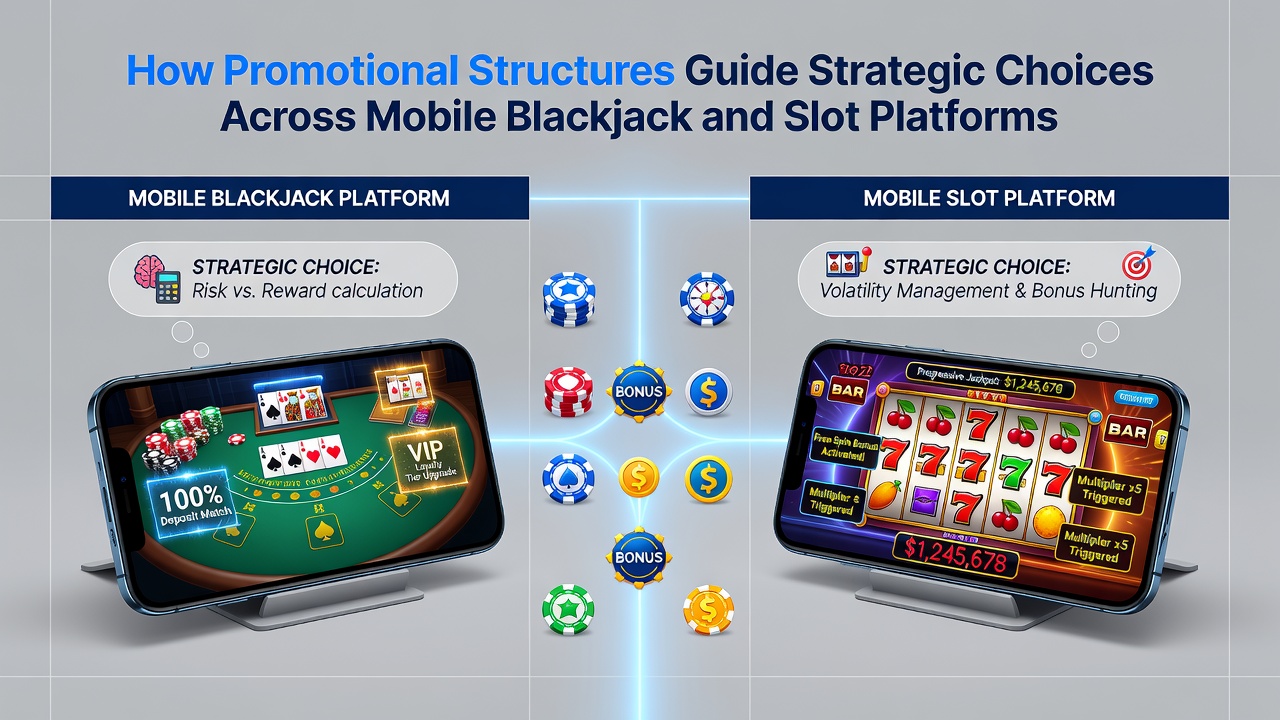
Promotional Designs Shaping Choices in Portable Blackjack and Reel Games
Promotional structures in mobile blackjack and slot environments operate through layered incentives that include deposit matches, free spins, cashback percentages, and loyalty multipliers, each carrying distinct wagering thresholds that players must navigate before withdrawals become available. Operators deploy these frameworks across platforms to extend engagement periods, with blackjack promotions often emphasizing table minimum adjustments and slot offers focusing on reel-specific multipliers that activate during designated time windows. Data collected through platform analytics in early 2026 shows players adjusting bet sizes and session lengths in direct response to these mechanics, particularly when promotions reset on the first of each month or align with weekend events.
Core Elements of Bonus Architectures
Blackjack promotions typically feature match bonuses tied to specific table variants, such as European or Atlantic City rules, where the required playthrough often ranges between 20x and 40x the combined deposit and bonus amount. Slot promotions, by contrast, incorporate free spin packages that carry separate contribution rates toward wagering totals, sometimes limiting eligible titles to newer releases while excluding progressive jackpot games entirely. Observers note that these distinctions create divergent decision trees, where blackjack participants prioritize variance control through side bet avoidance, whereas slot users concentrate selections on high-RTP titles during active promotion windows to accelerate requirement completion.
June 2026 figures from cross-platform operators reveal that sessions initiated under active cashback structures extend 35 percent longer on average than non-promotional play, with blackjack tables experiencing steadier increments because card counters track deck composition alongside remaining playthrough. Slot environments see sharper spikes when multiplier events coincide with daily login rewards, prompting users to sequence their spins across multiple titles within a single hour to maximize stacked benefits.
Decision Pathways Triggered by Wagering Rules
Players facing time-limited promotions frequently recalibrate their risk parameters, shifting from conservative flat betting in blackjack to occasional double-down sequences only when the remaining wagering requirement falls below a calculated threshold. Slot participants apply parallel logic by switching between low-volatility and medium-volatility reels once free spin allocations activate, a pattern confirmed through heat-map tracking of user behavior across major mobile providers. Research conducted by the American Gaming Association indicates that such adjustments correlate with measurable changes in average bet value, rising during the final 20 percent of any playthrough cycle as users seek to clear remaining obligations efficiently.
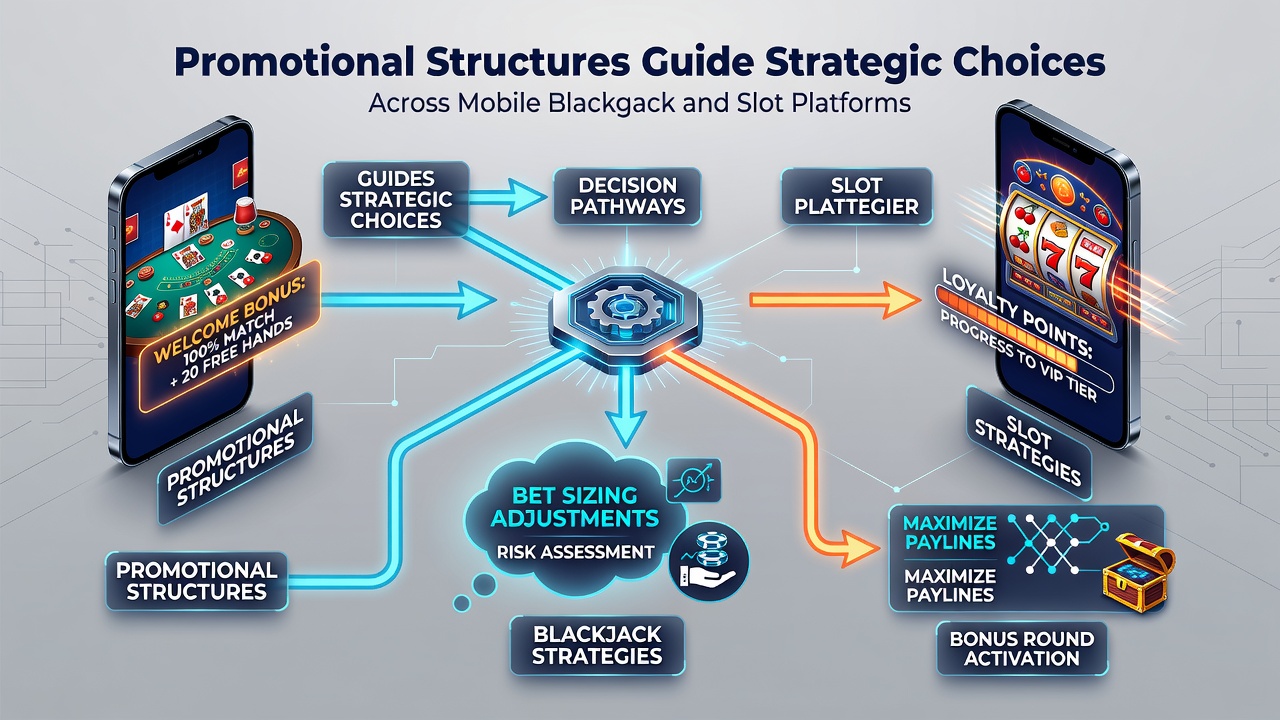
Cross-device synchronization further complicates these choices, because bonuses earned on tablets may carry different contribution percentages when transferred to phone interfaces, forcing users to verify eligibility before committing larger stakes. Loyalty tier systems compound this complexity by unlocking higher cashback ceilings at specific volume milestones, prompting some participants to consolidate activity on fewer platforms rather than spreading wagers across multiple operators.
Platform-Specific Implementation Patterns
Mobile blackjack environments integrate promotional triggers directly into the dealing interface, displaying remaining playthrough counters that update in real time after each hand resolution. Slot platforms embed similar trackers within the reel lobby, highlighting eligible games and pending free spin quantities through persistent banners that persist across orientation changes. Industry reports from the Canadian Gaming Association document that operators testing unified dashboards across both game types recorded higher retention when promotional timers aligned with real-world clock events, such as evening peak hours in different time zones.
Seasonal campaigns scheduled for June 2026 introduced tiered entry requirements, where accumulating a minimum number of qualifying hands or spins granted access to elevated reward brackets. Blackjack users responded by clustering sessions around these thresholds, while slot users distributed activity across multiple titles to meet volume targets without exceeding personal loss limits. These responses illustrate how the underlying architecture of each promotion steers volume allocation and timing decisions without altering core game rules.
Regulatory Context and Reporting Standards
Regulatory bodies in multiple jurisdictions now require operators to publish clear contribution percentages for every promotion type, enabling users to compare blackjack and slot offers on equal terms before depositing. The National Council on Problem Gambling has compiled aggregated datasets showing that transparent disclosure correlates with more predictable session planning, particularly among users who track playthrough progress through external spreadsheets or built-in tools. Such transparency also reduces disputes over eligible game lists, a factor that previously caused abrupt strategy shifts mid-session when certain titles were removed without notice.
Conclusion
Promotional structures continue to function as primary navigation tools within mobile blackjack and slot ecosystems, directing bet sizing, title selection, and session duration through explicit rules that players interpret in real time. The interplay between wagering multipliers, contribution rates, and loyalty thresholds produces distinct behavioral signatures across game categories, with blackjack favoring measured progression and slots rewarding rapid cycling during active windows. Platform operators refine these frameworks each quarter, incorporating feedback loops from user data to maintain alignment with regulatory expectations while sustaining engagement metrics observed throughout 2026.