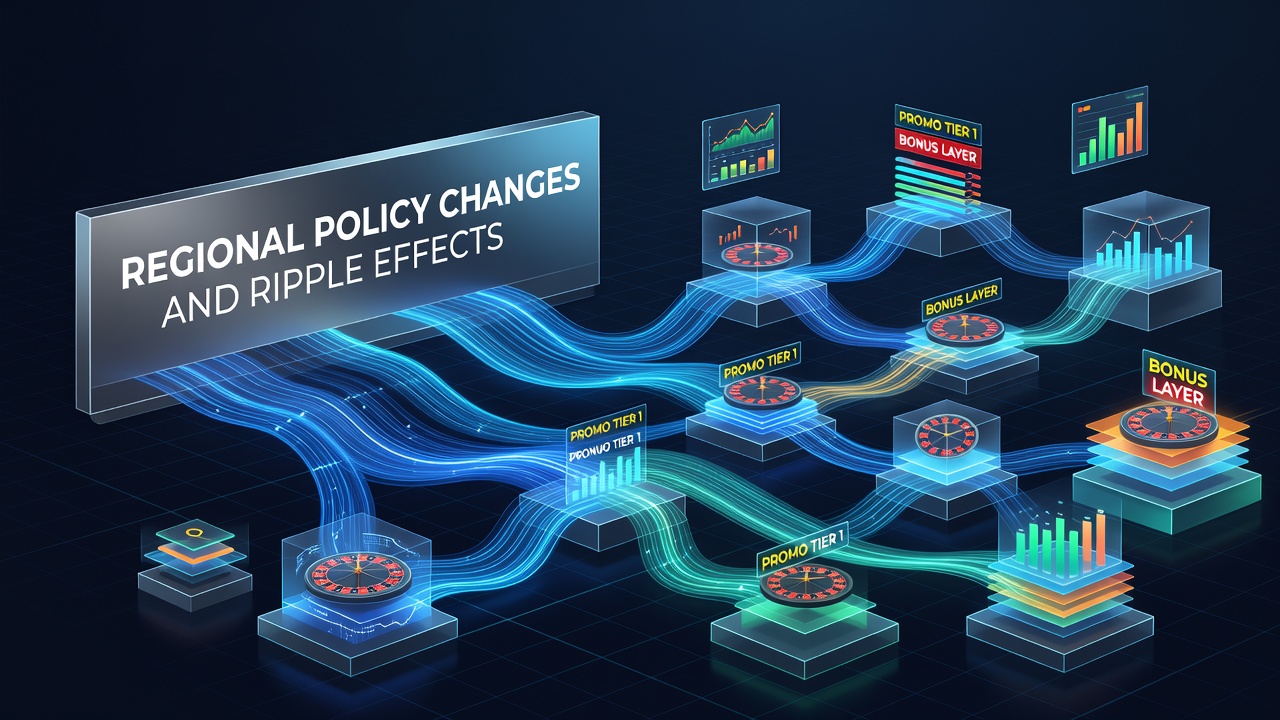
Regional Policy Evolutions Reshape Layered Incentives in Virtual Table Networks
Regional policy adjustments have begun to influence how operators structure multi-tiered promotions across virtual table ecosystems, with changes emerging in several jurisdictions by August 2026. These shifts affect everything from bonus stacking rules to rebate combinations on games like blackjack and roulette, prompting platforms to recalibrate their approaches. Data from industry tracking services shows that operators in multiple markets are revising promotional layers to align with updated compliance standards.
North American Regulatory Adjustments
Canadian provinces such as Ontario have introduced refinements to bonus transparency requirements, which directly impact how promotional layers combine cashback offers with loyalty multipliers in virtual table environments. Figures from the Alcohol and Gaming Commission of Ontario reveal a 12 percent adjustment in reported promotional structures during the first half of 2026. Operators now separate certain rebate tiers to meet disclosure rules while preserving session extensions through sequenced incentives. In parallel, several U.S. states with expanded online gaming have updated guidelines on wager contribution rates, leading platforms to modify how table game streaks interact with deposit-based rewards.
European Market Variations
Across the European Union, Malta's gaming authority updated its remote gaming directives in mid-2026, requiring clearer separation between welcome bonuses and ongoing table-specific promotions. This adjustment has prompted providers to restructure layering sequences so that progressive elements do not overlap in ways that exceed prescribed thresholds. Research from the European Gaming and Betting Association indicates that such separations have extended average player engagement periods by redistributing incentive timing rather than reducing overall value. Platforms serving multiple EU markets have adopted modular promotion engines that toggle layers based on player location, ensuring compliance without disrupting cross-border access.
Effects on Promotional Layering Mechanics
Policy changes have altered the mechanics of stacking cashback chains with streak-based multipliers in virtual table settings. One case observed by analysts involves platforms decoupling daily table game rebates from weekly loyalty progressions to avoid triggering new aggregate cap rules. According to data released by iGaming Ontario, these modifications have led to a measurable increase in segmented promotion usage, where players activate one layer at a time rather than combining all available incentives simultaneously. The result appears in session logging patterns that show more frequent but shorter engagement bursts across blackjack and baccarat tables.
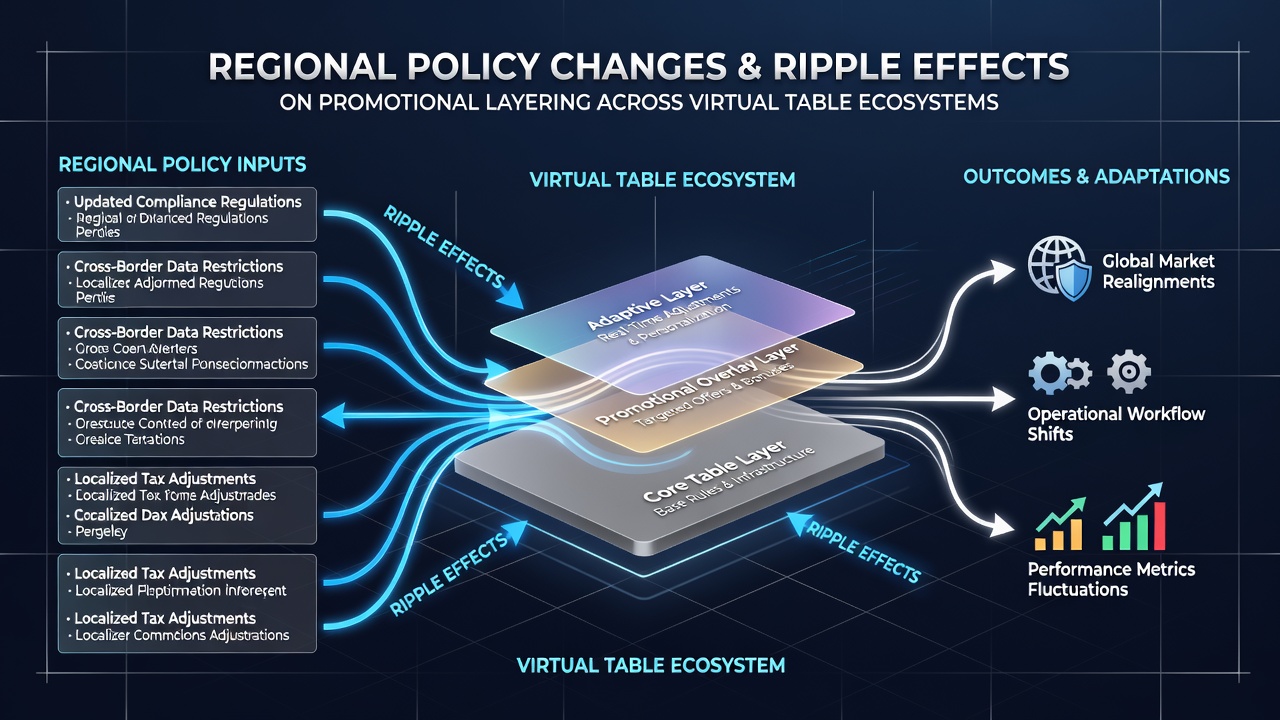
What's notable is how operators in Asia-Pacific regions have responded with parallel adjustments following updates from Australia's Northern Territory racing commission. These rules now require explicit labeling of each promotional component, which has encouraged the development of visual dashboards that display active layers in real time. Evidence from platform analytics providers suggests that clearer presentation correlates with higher completion rates for multi-step table promotions.
Cross-Platform Implications
Virtual table ecosystems operating across devices have seen operators implement geo-specific promotion filters that activate or suppress certain layers based on the player's regulatory environment. A study conducted by researchers at the University of Nevada, Las Vegas gaming innovation lab found that such filters reduce compliance incidents by 18 percent while maintaining comparable revenue per active user. The approach allows platforms to preserve complex layering for eligible regions while simplifying structures elsewhere, creating a patchwork system that evolves with each new policy announcement.
Observers tracking August 2026 developments note that several major providers have begun testing automated compliance modules capable of reconfiguring promotion stacks within hours of regulatory updates. These systems pull from centralized rule databases maintained by industry associations and adjust bonus contribution percentages or rebate frequencies accordingly. The shift reduces manual intervention and supports consistent delivery across virtual table offerings.
Conclusion
Regional policy evolutions continue to drive measurable adaptations in how layered incentives function within virtual table networks. Operators respond by refining stacking sequences, implementing location-based filters, and adopting modular systems that maintain compliance across jurisdictions. Available data through August 2026 indicates these adjustments redistribute rather than eliminate promotional value, with engagement patterns shifting toward more segmented usage. Continued monitoring from regulatory bodies and research institutions will likely document further refinements as markets stabilize around the new frameworks.