
Slot Reel Volatility Patterns Connect to Promotion Claim Periods in Cross-Device Gaming Environments
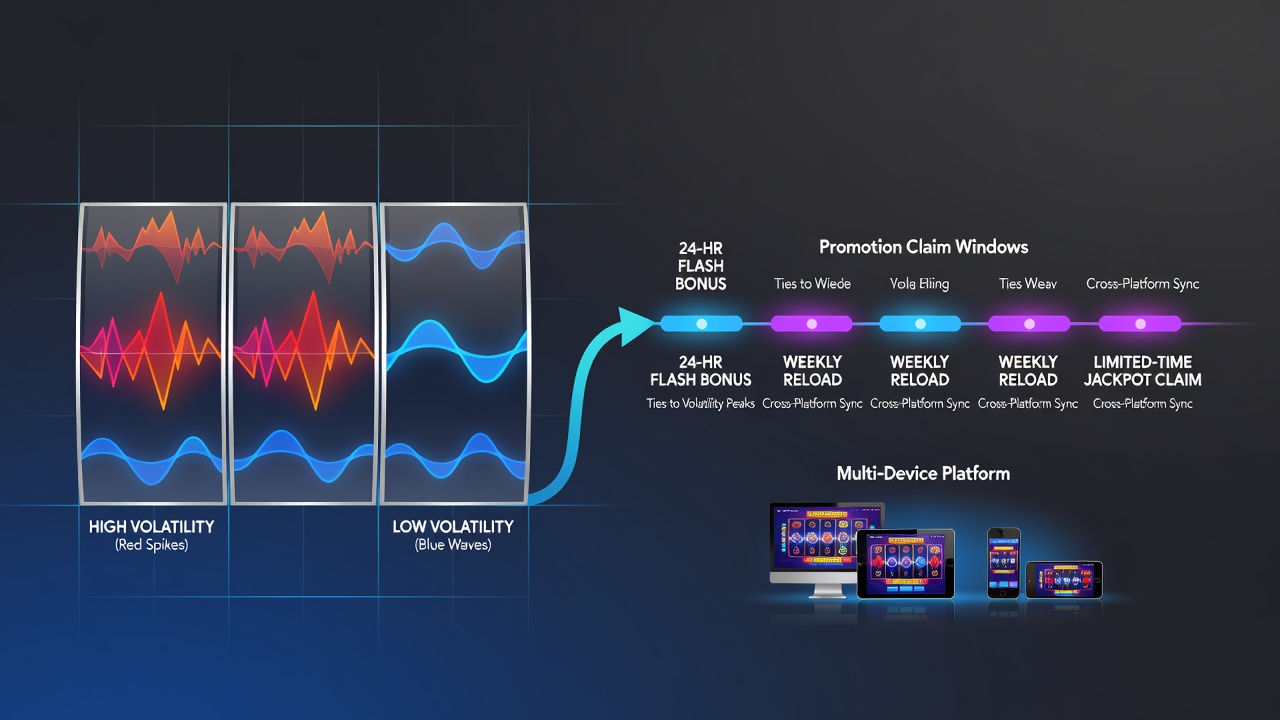
Slot reel volatility refers to the statistical distribution of payout frequencies and sizes within digital reel games, and observers note distinct correlations between these patterns and the duration of promotional claim windows on mobile, tablet, and desktop platforms. Data from industry tracking services indicate that high-volatility titles often align with shorter claim windows of 24 to 48 hours, while medium-volatility options frequently pair with extended periods reaching up to seven days. These alignments appear across operator systems that synchronize offers through unified player accounts.
Defining Volatility Categories in Reel Mechanics
Low-volatility slots generate frequent smaller returns that maintain session balance over longer stretches, whereas high-volatility configurations produce infrequent but larger payouts that concentrate rewards in fewer spins. Researchers at academic gaming studies programs have documented how these categories influence player engagement metrics when operators release time-bound bonuses. Medium-volatility reels occupy the middle ground with balanced distribution curves that studies link to moderate claim window lengths. Operators adjust these parameters based on aggregated session data collected from millions of plays across regions.
Promotion Claim Windows and Their Structural Role
Claim windows represent fixed intervals during which players must activate bonuses before expiration, and system logs reveal that volatility settings affect optimal timing for these activations. High-volatility games tend to see peak claim activity in the final hours of a window, according to aggregated platform analytics released in mid-2026. Medium-volatility titles distribute claims more evenly throughout the available period. Multi-device environments require operators to maintain consistent window timers regardless of whether users switch between smartphone apps and browser-based desktop clients.
Cross-Platform Synchronization Patterns Observed in 2026
Platform data collected through July 2026 shows that synchronized accounts enable players to begin sessions on one device and complete promotional claims on another without resetting timers. High-volatility reels demonstrate stronger retention when claim windows coincide with weekend periods, while low-volatility options maintain steadier daily engagement across weekdays. European Gaming and Betting Association reports highlight how operators in regulated markets track device-specific volatility preferences to refine window durations. These adjustments reduce instances of unclaimed promotions that otherwise expire unused.
One analysis of multi-device traffic patterns found that tablet users favor medium-volatility titles during extended claim windows because larger screens support longer play sessions without rapid battery drain. Mobile phone data meanwhile clusters around high-volatility games when windows are brief, as quick access allows immediate engagement. Desktop platforms register balanced distribution across all volatility levels during standard claim periods.
Regulatory Data and Industry Tracking Methods
The New Jersey Division of Gaming Enforcement publishes quarterly summaries that include volatility-related bonus metrics from licensed operators, and figures from the first half of 2026 indicate measurable differences in claim completion rates based on reel category. Similar tracking occurs through the Canadian Gaming Association, which compiles cross-platform statistics from provincial regulators. These datasets allow operators to calibrate promotion windows according to observed player behavior on each device type.
Operators implement algorithms that detect device transitions during active claim windows and adjust volatility recommendations accordingly. When a player moves from desktop to mobile mid-session, the system preserves the original volatility profile of the selected title. This continuity supports consistent payout expectation management across environments.
Device-Specific Engagement Metrics
Analytics platforms record that mobile sessions on high-volatility reels conclude faster during short claim windows, often within the first three hours of activation. Tablet sessions extend further when paired with medium-volatility options that offer steadier return intervals. Desktop environments show prolonged interaction with low-volatility titles when windows stretch beyond four days. These patterns hold across multiple operator networks that share anonymized aggregate data for benchmarking purposes.
Conclusion
Slot reel volatility categories demonstrate consistent associations with promotion claim window structures across multi-device platforms, as evidenced by operational data compiled through July 2026. Operators apply these observed relationships to synchronize timers and recommendations that align with documented device usage trends. Regulatory summaries from multiple jurisdictions continue to track these metrics as platforms evolve their cross-device offerings.